Unlocking Peace of Mind: Choosing the Right Deadbolts for Your Los Angeles Home
For homeowners across the sprawling, vibrant landscape of Los Angeles, security isn’t just a luxury; it’s a fundamental necessity. From the bustling streets of Downtown LA to the serene canyons of the Hollywood Hills, safeguarding your property and loved ones is paramount. While many security measures exist, few are as foundational and effective as a high-quality deadbolt. Often overlooked until a security concern arises, the right deadbolt can be the silent guardian that provides true peace of mind. But with a myriad of options available, how do you choose the best deadbolt for your specific Los Angeles home?
Related services: Locksmith in Los Angeles, Locksmith in San Diego, Locksmith in San Francisco
This comprehensive guide will delve into the world of deadbolts, exploring their importance, various types, critical features, and how to make an informed decision that enhances the security of your Los Angeles residence. Weβll also touch upon the invaluable role of professional installation in ensuring your chosen deadbolt performs optimally.
Why Deadbolts are Non-Negotiable for Los Angeles Security
Standard door knobs, while offering a basic level of privacy, are alarmingly easy to bypass for an experienced intruder. Their spring-loaded latches can often be jimmied open with simple tools, or even forced with a well-placed kick. This is where deadbolts step in as the first line of robust defense. Unlike spring latches, deadbolts operate with a solid metal bolt that extends deep into the door frame, making them significantly harder to force open. Their design requires a key (or an electronic input) to retract the bolt, offering a much higher degree of resistance against unauthorized entry.
In a city as diverse and dynamic as Los Angeles, where property crimes can occur, investing in superior deadbolts is a smart, proactive measure. It significantly deters potential intruders and provides an essential layer of protection for your valuables and, more importantly, your family.
Understanding the Different Types of Deadbolts
The market offers several types of deadbolts, each with distinct features and suitable for different security needs and preferences. Knowing the differences is crucial for making the best choice for your Los Angeles home.
-
Single Cylinder Deadbolts:
These are the most common type, featuring a keyhole on the exterior side and a thumb-turn lever on the interior side. They are convenient for quick exits during emergencies, as no key is needed from the inside. However, they can pose a security risk if located near a window that could be broken, allowing an intruder to reach in and unlock the door.
-
Double Cylinder Deadbolts:
Requiring a key for both the exterior and interior sides, double cylinder deadbolts offer enhanced security against forced entry, especially if there’s a nearby window. An intruder cannot simply break a window, reach in, and unlock the door. The trade-off is the potential safety hazard during an emergency, as occupants would need to locate a key to exit. Local building codes in Los Angeles may have specific requirements or restrictions for double cylinder deadbolts on certain exits, so itβs always wise to check.
-
Keyless & Smart Deadbolts:
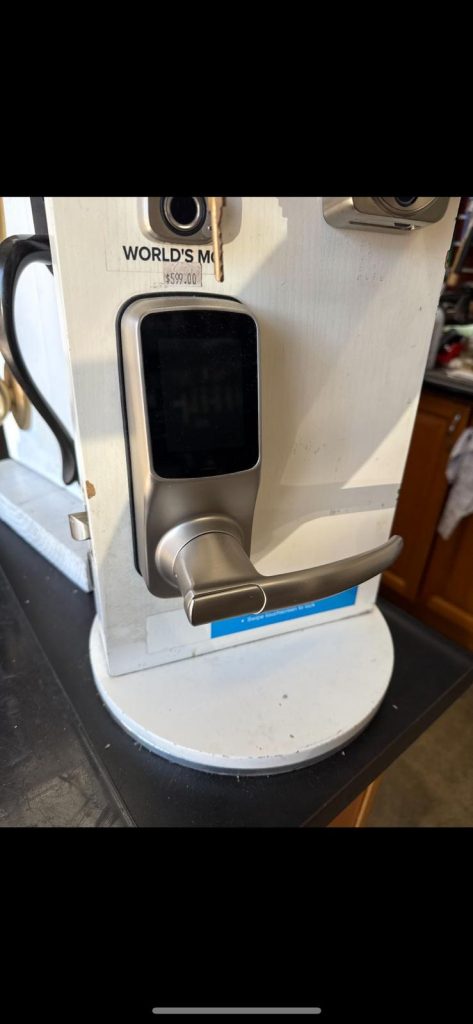
Embracing modern technology, these deadbolts eliminate the need for traditional keys. They often use keypads for code entry, fingerprint scanners, or connect to smart home systems via Wi-Fi or Bluetooth, allowing remote locking/unlocking via a smartphone app. For tech-savvy Los Angeles residents, smart deadbolts offer unparalleled convenience, remote access, and integration with other home automation features. They can also provide activity logs, giving you insight into who enters and exits your home.
-
Vertical Deadbolts:
Less common but highly secure, vertical deadbolts engage the door frame vertically rather than horizontally. This design makes them extremely resistant to “jimmying” or “prying” attacks, as the bolt is harder to dislodge from its strike plate. They are an excellent option for those seeking maximum physical security.
Key Features to Look for in a High-Security Deadbolt
Beyond the basic type, several critical features contribute to a deadbolt’s overall security and durability. When selecting a deadbolt for your Los Angeles home, pay close attention to these specifications:
-
ANSI/BHMA Grade:
This is perhaps the most important indicator of a deadbolt’s strength and durability. The American National Standards Institute (ANSI) and the Builders Hardware Manufacturers Association (BHMA) classify locks into three grades:
- Grade 1 (Best): Commercial-grade, offering the highest level of security, strength, and durability. Ideal for main entry doors.
- Grade 2 (Better): Residential security with good performance, suitable for most home applications.
- Grade 3 (Good): Basic residential security, suitable for interior doors or low-security applications.
For exterior doors in Los Angeles, always aim for Grade 1 or Grade 2 deadbolts.
-
Bolt Throw Length:
The bolt should extend at least 1 inch into the door frame. A longer throw provides greater resistance against forced entry and prying attempts.
-
Material and Construction:
Look for solid metal construction, preferably hardened steel or solid brass. Avoid deadbolts with significant plastic components in critical areas. The internal mechanisms should be robust and resistant to manipulation.
-
Anti-Pick & Anti-Drill Features:
High-security deadbolts often incorporate specialized pins (e.g., spool pins, serrated pins) to resist lock picking. Hardened steel inserts or ball bearings within the cylinder can prevent drilling attacks.
-
Bump Key Resistance:
Bumping is a common lock manipulation technique. Many modern deadbolts are designed with specific cylinder mechanisms to resist bump keys, offering an extra layer of protection.
-
Reinforced Strike Plate and Screws:
The strike plate (